
Every January, before I’ve even put away the holiday decorations, my mind turns toward the garden.
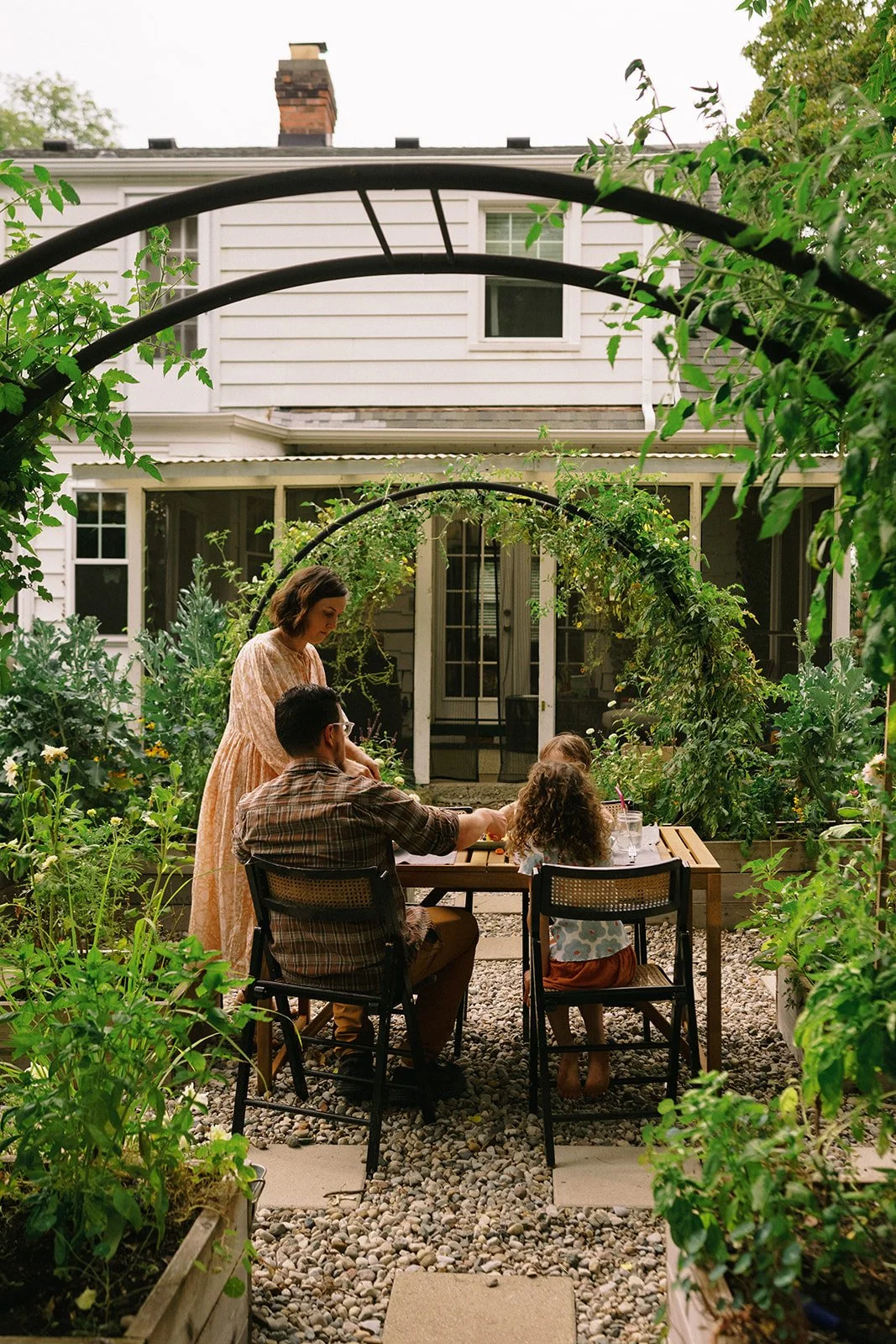
For me, garden planning isn’t about picking pretty seed packets. It’s about imagining the meals we’ll make, the herbs we’ll dry, and the way our small raised bed space can carry us through three Michigan growing seasons.
A few years ago, I shared a simple list of what I planned to grow — and it exploded on Pinterest. It made me laugh because it had almost no explanation… but clearly, people are hungry to understand how to plan a full year of planting in a small space.
So today, I’m updating this post with far more context, support, and clarity — especially for Michigan gardeners and beginners who want a realistic, grounded way to plan out their seasons.
How I choose what to grow in spring, summer, and fall — even with limited space
Before we get into the lists, here's the most important thing to understand:
👉 All of these crops are NOT in the garden at the same time.
Three-season gardening means your garden is constantly shifting — spring crops make space for summer crops, which make space again for fall crops.
This is how you get high yields from limited square footage.
And yes, even in Michigan, this is absolutely possible.
Raised beds warm quickly, cool-season veggies grow fast, and warm-season favorites take over when the weather turns.
Planning is what makes it all work together.
Cool Season 1 (March-May):
his is the season of fast, leafy, and frost-tolerant favorites. These plants love cold soil and short days.
I start some indoors (or winter sow) for an early jump, and I direct sow others.
Cool-Season Crops (Early Spring):
Nasturtium (seed, winter sow then transplant)
Broccoli (winter sow → transplant)
Kale (winter sow → transplant)
Cauliflower (winter sow → transplant)
Peas (direct sow)
Carrots (direct sow)
Celery (winter sow → transplant)
Cilantro (winter sow → transplant)
Brussels sprouts (winter sow → transplant)
Arugula (direct sow)
Lettuce (winter sow → transplant)
Spinach (direct sow)
Chives (winter sow → transplant)
Borage (direct sow)
Perennial herbs: peppermint, thyme, oregano, rosemary
Dill (winter sow → transplant)
Leek (winter sow → transplant)
Potatoes (direct sow)
Strawberries (transplants)
Why this matters:
These crops give you an early harvest AND make space for warm-season crops when temperatures rise.
Warm Season (May-September):
This is the season most people think of when they picture “the garden.”
Tomatoes, basil, cucumbers, peppers… everything that needs warm soil and long days.
I slowly add these in as spring crops finish.
Warm-Season Crops:
Marigold (indoors)
Zucchini (indoors)
Jalapeños (indoors)
Cucumbers (indoors)
Red + Green Peppers (indoors)
Banana Peppers (indoors)
Pepperoncini (indoors)
Green Beans (direct sow)
Roma Tomatoes (indoors)
Cherry Tomatoes (indoors)
Calendula (direct sow)
Basil (indoors)
Lavender (perennial)
Peppermint (perennial)
Parsley (indoors)
Ginger (rhizome → transplant)
Why this matters:
Warm-season crops demand space, support, and heat — so planting them gradually helps keep the garden manageable and productive.
Cool Season 2 (September-November):
This is Michigan’s secret season — incredibly productive, incredibly overlooked.
Many crops thrive again in the cooler weather. Some even tolerate early frosts.
Fall Cool-Season Crops:
Violas (indoors → transplant)
Broccoli (indoors → transplant)
Kale (indoors → transplant)
Cauliflower (indoors → transplant)
Peas (direct sow)
Carrots (direct sow)
Celery (indoors → transplant)
Cilantro (indoors → transplant)
Brussels sprouts (indoors → transplant)
Arugula (direct sow)
Lettuce (indoors → transplant)
Spinach (direct sow)
Chives (indoors → transplant)
Borage (direct sow)
Perennial herbs: peppermint, thyme, oregano, rosemary
Dill (indoors → transplant)
Leek (indoors → transplant)
And of course, I also have:
perennial blackberry
blueberry
raspberry shrubs
Why this matters:
Fall gardening doubles your harvest potential without adding more beds or more space.

When you see garden planning laid out this way, the lists suddenly make sense.
Three-season gardening isn’t about planting more.
It’s about planting smarter.
It’s about choosing what you love, giving every plant the space and timing it needs, and letting your raised beds work harder for you — not the other way around.
And if this looks overwhelming?
You’re not alone.
This used to feel like a giant puzzle for me too… until I learned the simple planning framework I now teach my clients.

Want to Learn HOW to Plan Your Seasons This Way?
If this post sparked something in you… and you want to learn how to plan your garden with clarity instead of confusion, my free mini-class will walk you through the exact process:
🌱 The garden-to-table jumpstart
Inside this free class, you’ll learn:
how to plan your spring, summer, and fall crops
what to plant when in Michigan
how to use your raised bed space efficiently
which crops belong in each season
how timing and consistency make gardening easier
By the end, you’ll understand how to make your own version of this three-season plan — in a way that fits your real life.
✨ Watch the free mini class here.
Let’s make this the year your garden feels abundant, clear, and genuinely fun.